
Inkless Scar Revision Using Nue Conceal Regen and Bright Serums
Some scars sit flat but still catch the eye. Others feel tight, shiny, pale, pink, brown, or slightly raised long after the skin has healed. Inkless scar revision is designed for those kinds of marks: healed scars that need texture and tone support without adding pigment to the skin.
It is a skin-focused treatment that uses a tattoo-style device or microneedling method to create controlled micro-channels in the scar tissue. Instead of implanting camouflage ink, the technician works with specialist serums, such as Nue Conceal Regen Serum and Nue Conceal Bright Serum , to support the skin’s natural repair response.
The goal is not to “erase” a scar. No responsible scar treatment can promise that. The aim is to help the scar blend better with the surrounding skin by improving the look of texture, colour unevenness, firmness, dullness, or visible contrast.
This article is general information only. Scar revision results vary, and anyone with a medical condition, active skin issue, or complex scarring should seek advice from a qualified health professional before treatment.
What inkless scar revision does
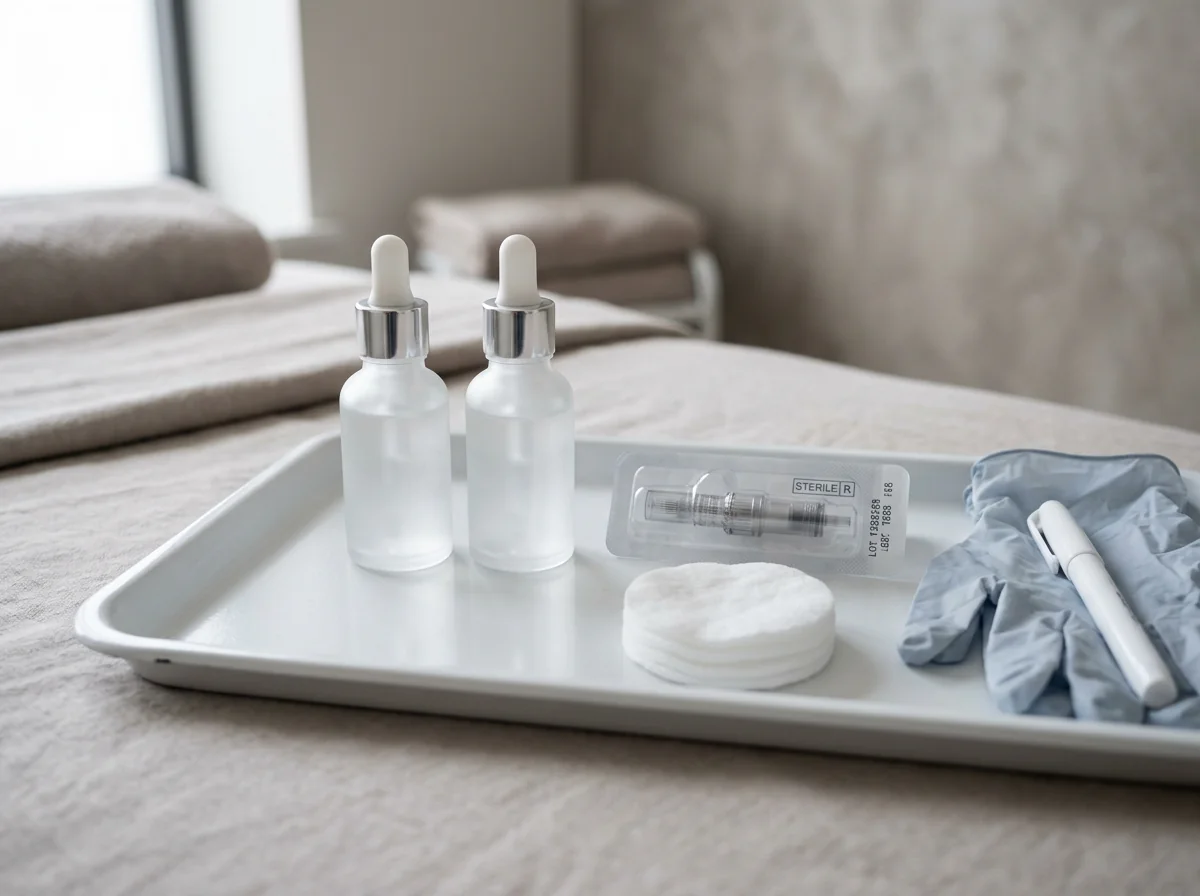
Inkless scar revision works by creating tiny controlled channels in the surface of the skin. This controlled stimulation may encourage the skin to start a repair process in the treated area. The serum used during or after the treatment is chosen to support that process.
In a standard camouflage tattoo, pigment is placed into the skin to cancel or match colour. Inkless work is different. It does not try to cover the scar with colour. It focuses on improving the appearance of the scar itself.
Common treatment goals include:
- Softening the look of scar tissue
- Helping a flat scar appear smoother
- Reducing the contrast between the scar and nearby skin
- Supporting a healthier-looking skin surface
- Improving dull, uneven, or dry-looking scarred skin
- Helping some discoloured scars appear more balanced over time
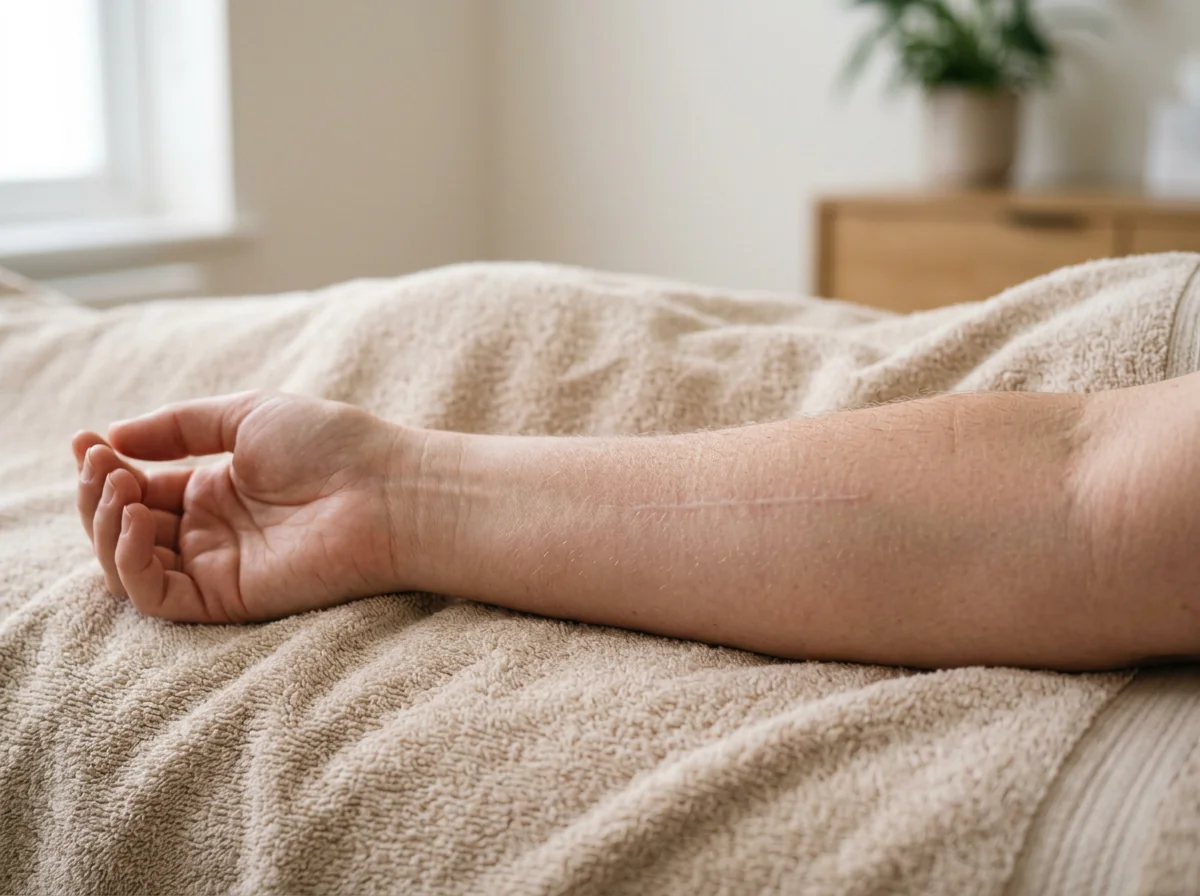
The treatment is often used on mature scars from surgery, injury, stretch marks, acne, or everyday skin trauma. It can be a good option when the scar colour is difficult to match with pigment, when someone does not want tattooing, or when the skin needs texture support before any future camouflage work.
Who inkless scar revision is for
Inkless scar revision is usually best suited to scars that are fully healed and stable. A scar should no longer be open, scabbing, inflamed, infected, or changing quickly. Many technicians prefer scars to be at least several months old, and older scars are often easier to assess because the skin has already gone through the early healing stages.
It may suit people with:
- Flat pale scars These scars can stand out because they reflect light differently from the surrounding skin. Inkless work may help improve surface quality, although it cannot always restore natural pigment.
- Stretch marks Stretch marks are a form of dermal scarring. Inkless revision can be used to support texture and tone, especially when the marks are mature and lighter in colour.
- Surgical scars Once fully healed, some surgical scars can look tight, shiny, uneven, or slightly raised. Inkless work may soften the visual effect.
- Acne scars Shallow texture changes may respond differently from deeper pitted scars. A thorough assessment matters here, as some acne scarring may need other skin therapies.
- Minor injury scars Cuts, grazes, and small trauma scars that have healed well may be suitable if the skin barrier is healthy.
Inkless work may also appeal to people who prefer a more natural-looking approach. Because no colour is implanted, there is no pigment to fade into an unwanted shade or mismatch later if the skin tans, lightens, or changes over time.
That said, not every scar is a good candidate.
Who should avoid or delay treatment
A careful technician should screen the skin before starting. Inkless scar revision should usually be delayed or avoided if the area has active irritation, infection, broken skin, sunburn, dermatitis, psoriasis flare-ups, or unexplained changes.
It may not be suitable for people who:
- Are prone to keloid scarring
- Have a history of poor wound healing
- Are currently using certain acne medications or strong skin treatments
- Are pregnant or breastfeeding, depending on practitioner policy
- Have uncontrolled diabetes or immune-related concerns
- Are taking blood-thinning medication, unless medically cleared
- Have a scar that is still red, hot, sore, itchy, or raised and active
Darker skin tones can absolutely be treated, but the approach should be cautious. Any treatment that creates controlled trauma in the skin can carry a risk of post-inflammatory hyperpigmentation or hypopigmentation. Patch testing and conservative technique are often important.
If a scar is painful, rapidly changing, unusually raised, or the result of a major injury or surgery, medical review should come before cosmetic revision.
How Nue Conceal Regen Serum supports scar work
Nue Conceal Regen Serum is used in inkless scar revision as a skin-conditioning serum. The name suggests its role: to support regeneration-focused treatment, especially where the skin needs help with texture, firmness, and overall appearance.
During an inkless session, the skin is gently opened with controlled micro-channels. A serum like Regen is applied so it can work with the treatment area as the skin begins its normal repair response.
In practical terms, Regen Serum is used when the focus is on:
- Skin that looks thin, shiny, or tired
- Scar texture that feels uneven
- Areas that need hydration support
- Scars that need softening in appearance
- Skin that would benefit from a healthier-looking surface
The serum does not replace the body’s own healing process. It supports the environment around that process. A useful way to think about it is this: the device creates the controlled stimulation, and the serum helps condition the skin during the repair window.
A skilled practitioner will also consider pressure, needle depth, passes, skin response, and aftercare. The serum is one part of the treatment, not the whole treatment.
How Nue Conceal Bright Serum helps with tone
Nue Conceal Bright Serum is used when the concern is more about colour balance and visible dullness. Some scars do not only differ in texture. They also appear darker, shadowed, uneven, or more noticeable because the tone around the scar is not balanced.
Bright Serum is suited to treatments where the goal is to support a clearer, fresher-looking skin tone. It may be chosen for scars or stretch marks that appear dull, discoloured, or uneven against the surrounding skin.
It is not bleach, and it should not be treated like one. The aim is gradual improvement in the look of tone, not harsh lightening or stripping the skin.
Bright Serum may be useful when the scar appears:
- Slightly darker than nearby skin
- Dull or greyish
- Uneven in tone
- Marked by post-inflammatory colour changes
- More visible because of contrast
Some scars need both texture and tone support. In those cases, a practitioner may choose one serum for a first phase and another later, or use them according to the scar’s main concern. The right choice depends on the skin, the scar, and how the area responds.
Regen Serum and Bright Serum are used for different scar concerns
Regen and Bright can work together in a treatment plan, but they do not do the same job. The difference is easier to understand when matched to the main concern.
- Scar concern | Serum focus | Why it may be chosen
- Uneven texture | Nue Conceal Regen Serum | Supports the look and feel of repaired skin
- Shiny or tight-looking scar tissue | Nue Conceal Regen Serum | Helps condition the skin during revision work
- Dull or uneven tone | Nue Conceal Bright Serum | Supports a clearer-looking surface
- Darker-looking marks | Nue Conceal Bright Serum | Helps with visible tone imbalance
- Mixed texture and tone concerns | Regen and Bright in a plan | Allows treatment to focus on different goals over time
Many people assume scar revision is only about colour. In reality, texture often makes a scar more visible than tone. A scar can match the skin fairly well but still catch light because it is smoother, tighter, indented, or raised. That is where a regeneration-focused serum may be preferred.
By contrast, a scar with good texture but a strong colour difference may need a brightening approach first.
What happens during an appointment
A good appointment starts with assessment, not treatment. The practitioner should look at the scar, ask about medical history, discuss healing, and explain realistic outcomes.
A typical process may include:
- Consultation and skin check The scar is assessed for age, colour, texture, thickness, and stability. Photos may be taken for comparison.
- Skin preparation The area is cleansed and prepared. The technician may mark out the treatment zone.
- Controlled needling A tattoo-style machine is used to create small channels in the skin. The depth and technique should be adapted to the scar.
- Serum application Nue Conceal Regen Serum or Nue Conceal Bright Serum is applied according to the treatment goal.
- Aftercare instructions The treated skin needs time to settle. Aftercare usually includes keeping the area clean, avoiding sun exposure, avoiding picking, and skipping harsh actives until the skin has recovered.
The area may look pink, tender, or slightly swollen afterwards. This is expected with many skin needling treatments, but severe pain, heat, pus, spreading redness, or unusual symptoms should be checked by a health professional.
How many sessions are usually needed
Inkless scar revision is usually a series treatment. One session may improve the way the scar looks, but many scars need several visits spaced apart so the skin has time to heal between sessions.
The number of sessions depends on:
- The age of the scar
- The size of the area
- Whether the scar is flat, raised, or indented
- The type of scar tissue
- Skin tone and healing response
- How closely aftercare is followed
- The goal of treatment
A small, flat, mature scar may need fewer sessions than a wide stretch mark area or a complex surgical scar. Some people notice a change in texture first. Others notice the scar looks less stark over time. Progress can be subtle, so comparison photos are helpful.
It is better to work gradually than to overwork the skin. Aggressive treatment can create more inflammation, which may increase the chance of unwanted colour change or irritation.
What inkless scar revision cannot do
Good scar work relies on honest expectations. Inkless revision can improve the appearance of some scars, but it has limits.
It cannot:
- Remove a scar completely
- Guarantee colour restoration
- Flatten severe raised scars in every case
- Fill deep pitted scars like a surgical procedure might
- Replace medical treatment for keloids or hypertrophic scars
- Give the same result on every skin type
- Work instantly after one session
It also cannot make scar tissue behave exactly like untouched skin. Scarred skin has a different structure, and even when it improves, it may still look or feel different.
That does not mean the treatment is not worthwhile. For many people, even a moderate improvement can make a scar less noticeable in daily life. The best results often come from matching the treatment to the scar rather than forcing one method onto every mark.
Aftercare makes a real difference
The healing window after inkless scar revision matters. The skin has been intentionally stimulated, so it needs calm, simple care.
Common aftercare principles include:
- Keep the area clean and dry at first
- Avoid swimming, saunas, and heavy sweating until advised
- Do not pick, scratch, or exfoliate the area
- Avoid direct sun exposure
- Use only recommended aftercare products
- Skip fake tan, retinoids, acids, and strong actives until cleared
- Wear loose clothing if friction is an issue
Sun protection is especially important in Australia. UV exposure can darken healing skin and make colour unevenness more noticeable. Once the area has closed and your practitioner allows it, broad-spectrum sunscreen can help protect the result.
A calm healing process gives the skin the best chance to respond well.
How to know if it is the right treatment
Inkless scar revision is worth considering when the scar is healed, stable, and bothersome because of texture, tone, or contrast. It is especially useful when pigment camouflage is not the first choice or when skin quality needs work before colour correction.
A good candidate usually has realistic expectations, healthy skin in the treatment area, and enough patience for gradual change.
Before booking, ask:
- Is my scar fully healed and stable?
- Is the main issue texture, tone, or both?
- Would Regen Serum, Bright Serum, or both suit my concern?
- How many sessions might be reasonable?
- What are the risks for my skin tone?
- What aftercare will I need to follow?
- Should I see a doctor before cosmetic scar work?
The best outcomes come from careful assessment, conservative technique, the right serum choice, and consistent aftercare. Nue Conceal Regen Serum is best understood as support for skin renewal and texture-focused work. Nue Conceal Bright Serum is better suited to tone and dullness concerns. Used thoughtfully, they give inkless scar revision a targeted way to help scars look calmer, smoother, and more blended with the surrounding skin.
BOOK YOUR FREE CONSULTION
At Unify Skin & Laser Clinic we answer all your questions before you start your sessions. Experience does count and we want you to know you’re in safe hands.
Email: laserclinic@unifyprivatestudio.com
Call: 0407 413 180 or
Click the link to book your consult or an appointment online https://www.fresha.com/book-now/unify-skin-laser-clinic-c8lfwhk6/all-offer?pId=486032